Why South Plains Caliche Demands a Tough Retaining Wall
If you live in Lubbock, you already know that digging a hole here is not like digging in other parts of Texas. Beneath the topsoil lies caliche, a naturally cemented layer of calcium carbonate that can be as hard as concrete. It does not absorb water well, it shifts with seasonal moisture changes, and it puts enormous pressure on any wall built to hold back soil. A retaining wall that works fine in sandy or loamy soil may crack, lean, or fail prematurely when backfilled against caliche.
On top of the soil challenge, the South Plains climate adds two more stressors: relentless wind and frequent hail. Wind loads push against the exposed face of a wall, especially on open lots with little vegetation. Hail impacts can chip, spall, or crack weaker materials. When you combine caliche backfill, wind pressure, and hail, the material you choose for your retaining wall is not a cosmetic decision. It is a structural one. The right material will handle movement, resist impact, and look good for decades. The wrong one will cost you Retaining Wall Repair bills sooner than you expect.
Concrete Retaining Walls: The Heavyweight Champion for Caliche
Concrete Retaining Walls are the most robust option for South Plains conditions. Poured concrete can be engineered to resist the lateral pressure that caliche exerts, and it can be reinforced with steel rebar to handle minor settling without cracking. Because concrete is monolithic, there are no joints for wind-driven rain to penetrate. It also stands up well to hail, which tends to bounce off a smooth, well-cured surface rather than shatter it. For homeowners in Wolfforth or other outlying areas with exposed lots, concrete offers peace of mind.
The tradeoff is appearance and cost. Poured concrete can look industrial unless you add a decorative finish, such as stamping or a stone veneer. It also requires a proper footing and drainage system, because caliche does not drain freely. If water builds up behind a concrete wall, hydrostatic pressure can push it over. That is why any Retaining Wall Installation in Lubbock must include gravel backfill and weep holes, regardless of material. Concrete is not the cheapest upfront, but it often delivers the lowest lifetime cost in this climate.
Block Retaining Walls and Segmental Systems: Flexibility Meets Durability
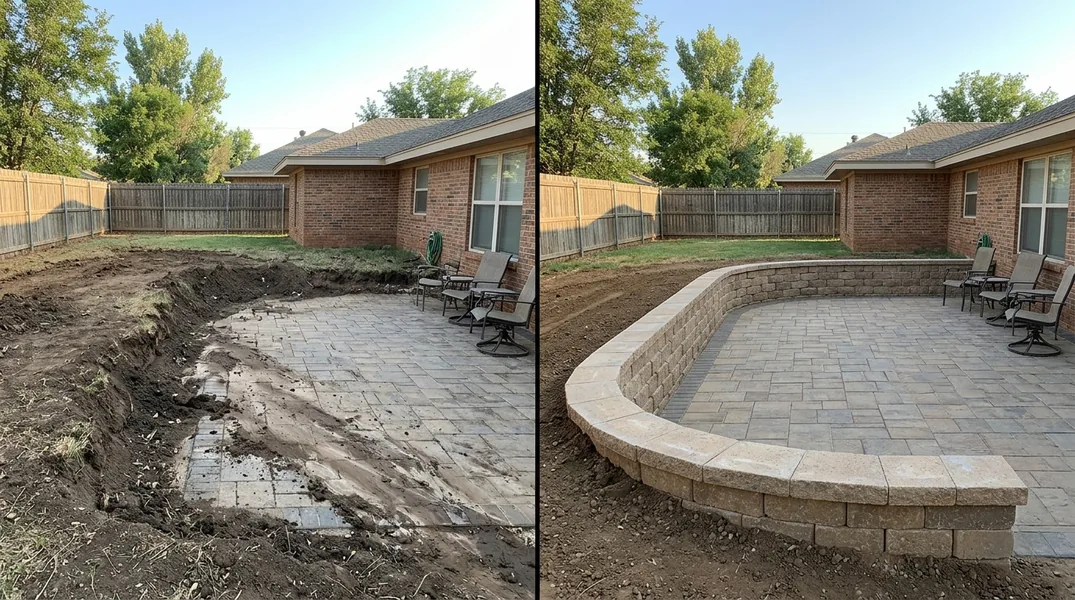
A block retaining wall (also called a segmental retaining wall) is built from interlocking concrete blocks that stack without mortar. These systems are engineered to flex slightly with soil movement, which is a real advantage when caliche expands and contracts. The joints between blocks allow minor shifting without visible cracking. Segmental blocks also come in a wide range of colors and textures, so you can match the look of local stone or create a clean modern line. For hail resistance, concrete blocks perform well because they are dense and thick.
The key to a successful block wall in Lubbock is proper base preparation. Caliche can create a false sense of stability because it feels solid, but a segmental wall still needs a compacted gravel base and correct embedment depth. Without that, the wall can settle unevenly. A Retaining Wall Replacement is often necessary when an older block wall was built directly on graded caliche without a proper base. Modern segmental systems, installed correctly, can last 30 to 50 years or more in South Plains conditions.
Limestone Retaining Walls: Natural Look, Local Advantage
A limestone retaining wall is a popular choice for homeowners who want a natural, rustic appearance that blends with the West Texas landscape. Limestone is quarried locally in the region, so it is a genuine South Plains material. It is heavy, dense, and highly resistant to hail. Unlike concrete, which can show chips, limestone tends to weather gracefully, developing a patina over time. For properties near Ransom Canyon or Buffalo Springs, where natural stone is part of the aesthetic, limestone is often the best visual fit.
However, limestone walls require careful construction. The stones must be properly seated and backed with free-draining gravel, because caliche backfill can trap moisture against the stone. Limestone is also porous, so in freeze-thaw cycles (which Lubbock does experience), water absorbed into the stone can expand and cause spalling. A professional installer will select the right grade of limestone and include a drainage plane. Done right, a limestone wall can last generations. Done poorly, it can bulge or lean within a few years. This is not a material for a weekend DIY project.
Retaining Wall Installation Cost in Lubbock: What to Budget
Homeowners often ask about pricing before choosing a material, and that is smart. In the Lubbock area, retaining wall costs vary by material, wall height, access, and site conditions. Concrete walls typically range from $30 to $60 per square foot of wall face, depending on finish and reinforcement. Segmental block walls often fall in the $25 to $50 per square foot range, with premium blocks at the higher end. Limestone walls can run $40 to $70 per square foot because of the labor involved in placing and fitting natural stone. These are rough ranges, not quotes, because every yard is different.
Caliche can increase cost if excavation is required, since breaking through it takes specialized equipment. A wall under four feet tall is usually simpler and less expensive than a taller engineered wall. Always ask for a written free estimate that specifies the material, footing, drainage, and permit requirements. A low bid that skips drainage or base preparation is not a bargain. It is a future repair bill. For a realistic budget, call Lubbock Retaining Wall at (806) 298-6516 and describe your project.
Retaining Wall Installation Near Me: When to Call a Pro
If you are searching for retaining wall installation near me in Lubbock, you are probably weighing DIY versus professional installation. For small garden walls under two feet, a confident homeowner can sometimes handle a block kit. But once a wall holds back significant soil, especially caliche, the stakes rise quickly. Caliche does not drain, wind loads are real, and hail can expose weak mortar or loose caps. A failed wall can damage landscaping, fences, or even a foundation. Professional installation includes engineering judgment about soil pressure, drainage, and base depth that is hard to replicate from a video tutorial.
A good installer will also help you choose the right material for your specific site. A south-facing wall with full sun and wind exposure may need a different approach than a shaded courtyard wall. Lubbock Retaining Wall serves homeowners across the South Plains and can assess your soil, slope, and drainage before recommending concrete, block, limestone, or a segmental system. Whether you need a new wall or are considering repair, getting a professional opinion early saves money and headaches. Reach out for a free estimate and protect your landscape investment.
Looking for a professional retaining wall contractor in Lubbock? Lubbock Retaining Wall responds fast for all your retaining wall needs.
Get a Free QuoteOur services: Retaining Wall Installation · Retaining Wall Repair · Retaining Wall Replacement