



Retaining Wall Drainage in Lubbock: Keep Water From Pushing Your Wall Over
Lubbock sits on the flat Llano Estacado at about 3,200 feet, and that flat ground hides a drainage problem under every wall. Caliche hardpan traps water just below the surface, pockets of expansive clay swell and shrink, and summer downpours send runoff into the playa lakes that double as stormwater basins. When a wall holds back saturated soil, the water pressure behind it is what pushes block out of line, cracks poured concrete, and tips timber walls. Our Retaining Wall Drainage in Lubbock work relieves that pressure with French drains, weep holes, gravel backfill, and filter fabric built for this soil. If your wall is already leaning, start with leaning and collapsed wall repair before we rebuild the drainage behind it.
Why Drainage Decides Whether a Lubbock Wall Lasts
Most wall failures we open up in Lubbock are not material failures. They are water failures. Rain soaks into the backfill, hits the caliche hardpan, and sits there for days because it has nowhere to go. That perched water adds weight, softens the clay, and freezes in a hard winter, which cracks mortar joints and pushes walls out of line. The fix is to give the water a path out before it builds pressure.
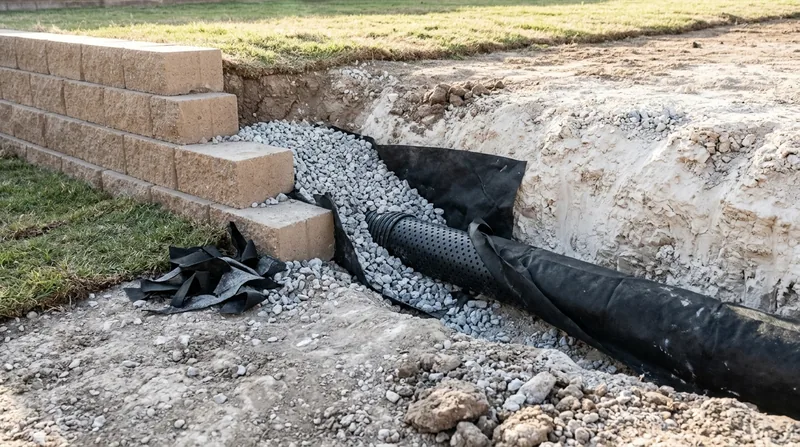
- We install perforated French drain pipe at the footing to carry water away from the wall.
- We cut weep holes through block and concrete walls so water can exit the face.
- We place washed gravel backfill and filter fabric so silt does not clog the drain.
- We grade the soil behind the wall so runoff flows away instead of pooling.
Done right, the drainage system does the quiet work that keeps the wall plumb through playa floods and freeze cycles.
Key info: A split-face block wall around a sunken patio in Tech Terrace failed after a summer storm because the backfill had no outlet above the caliche. Water built up behind 40 feet of wall and pushed the top course out 3 inches. Weep holes and a French drain would have prevented it.
For the engineering side of drainage, the City of Lubbock building department can confirm permit thresholds for walls above roughly 4 feet or walls that support a driveway or structure.
How We Build Drainage Behind Lubbock Walls
We start by opening the wall and reading the water. On canyon-rim lots in Ransom Canyon and Buffalo Springs, the slope sheds water fast and the problem is concentrated flow. On flat lots in Lakeridge and Rush, the problem is water that cannot move at all. Same soil, different fixes. Here is the sequence we follow.
- We expose the backfill and locate where water is actually perched.
- We dig a trench along the footing and set perforated pipe on a gravel bed.
- We wrap the pipe and gravel in filter fabric to keep caliche silt out of the drain.
- We cut weep holes at the low points of block and concrete walls.
- We backfill with washed gravel and regrade the surface to shed runoff.
- We test the system with a hose before we close the wall.
Each step targets the same goal: move water out of the wall zone before it loads the structure.
Local example: A timber wall in an older backyard near Maxey Park had rotted through because runoff from the alley garage roof dumped straight into the backfill. We replaced the drainage, regraded the alley side, and the new wall in Wolfforth stayed dry through the next hail season.
If the wall itself is sound and only the drainage is missing, we tie the work into our retaining wall repair service so the structure and the water path are fixed together.
Drainage Approaches We Use on Lubbock Soil
The right approach depends on the wall type, the slope, and where the water comes from. These are the methods we use most often around Lubbock and the surrounding towns.
| Approach | Description | Best for |
|---|---|---|
| French drain at the footing | Perforated pipe in gravel, wrapped in filter fabric, sloped to an outlet | Block and concrete walls holding saturated clay |
| Weep holes | Openings through the wall face that let water exit before it loads the structure | CMU, split-face block, and poured concrete walls |
| Gravel backfill and filter fabric | Washed stone behind the wall with fabric to stop silt from clogging the drain | New walls and rebuilt walls on caliche |
| Surface regrading and swales | Reshaping the ground behind the wall so runoff flows away from the wall | Flat lots where water pools against the wall |
| Chimney drain on slopes | A vertical gravel column that carries water down the slope to the footing drain | Canyon-rim lots in Ransom Canyon and Buffalo Springs |
We pick the combination that matches the wall and the water, not a one-size template.
Retaining Wall Drainage Cost in Lubbock: What to Expect
Drainage work starts at $2,500 for a typical residential wall and moves up with length, depth, and access. A short run behind a raised bed is at the low end. A 60-foot wall on a canyon-rim lot with a chimney drain and a long outlet run is a bigger job. The price depends on how much wall we have to open, how far the water has to travel to an outlet, and whether the wall needs structural repair at the same time.
Access matters more than people expect. A wall tight against an alley garage in Heart of Lubbock is harder to work on than one with open yard behind it. Expansive clay pockets can also force deeper excavation. We give you a written scope before we start, and we recommend getting two or three estimates so you can compare the drainage design, not just the number. Our full pricing overview breaks down how we build a quote.
Retaining Wall Drainage Near Me: How to Pick a Contractor Near Lubbock
Ask three things before you hire anyone for drainage work near Lubbock. First, confirm the company carries insurance and can show you a certificate. Second, get two or three written estimates and compare the drainage design, not just the price. Third, ask for references from jobs on similar soil and slope, because a flat lot in Shallowater and a canyon-rim lot in Ransom Canyon need different solutions.
Ask whether the work needs a permit from the City of Lubbock building department, especially for walls over about 4 feet or walls that support a driveway or structure. If you live under an HOA, check the rules before work starts. A contractor who answers these questions clearly is a contractor worth hiring. You can reach us through our contact page to set up a free estimate.
We are fully insured and hold NCMA Segmental Retaining Wall Installer Certification, and we will show you the certificate on request.
Retaining Wall Drainage in Lubbock: Pricing Guide
| Service | Price | Details |
|---|---|---|
| Basic French drain behind existing wall | Starting at $2,500 | Perforated pipe, gravel, filter fabric, and outlet for a typical residential wall run. |
| Weep holes and gravel backfill | Starting at $2,800 | Cutting weep holes and rebuilding backfill on block or concrete walls with poor drainage. |
| Full drainage rebuild with regrading | Starting at $4,500 | Drain, backfill, surface regrading, and outlet work for longer or deeper wall sections. |
| Canyon-rim chimney drain | On estimate | Slope drainage on Ransom Canyon and Buffalo Springs lots needs an on-site look first. |
| Travel | Included | In Lubbock and surrounding areas, no separate call-out or mileage fee. |
| Estimate | Free | Response within 24h at (806) 298-6516, no obligation to book. |
Indicative pricing, the exact cost depends on square footage, finish, and site access. Free personalized estimate within 24h at (806) 298-6516.


